North American supply chains have become too fragmented,
too technology intensive and too volatile to manage through disconnected providers and closed platforms.
The solution is the Open 4PL: AI enabled layers of orchestration that connect data, technology, physical execution, digital services and human judgment, allowing shippers to choose the best available capability for their network.
The test is simple: a provider that only orchestrates its own products is not an orchestrator. It is a suite.
of supply chain leaders already outsource to a 4PL
more plan to outsource to a 4PL within two years
projected 4PL market value by 2030
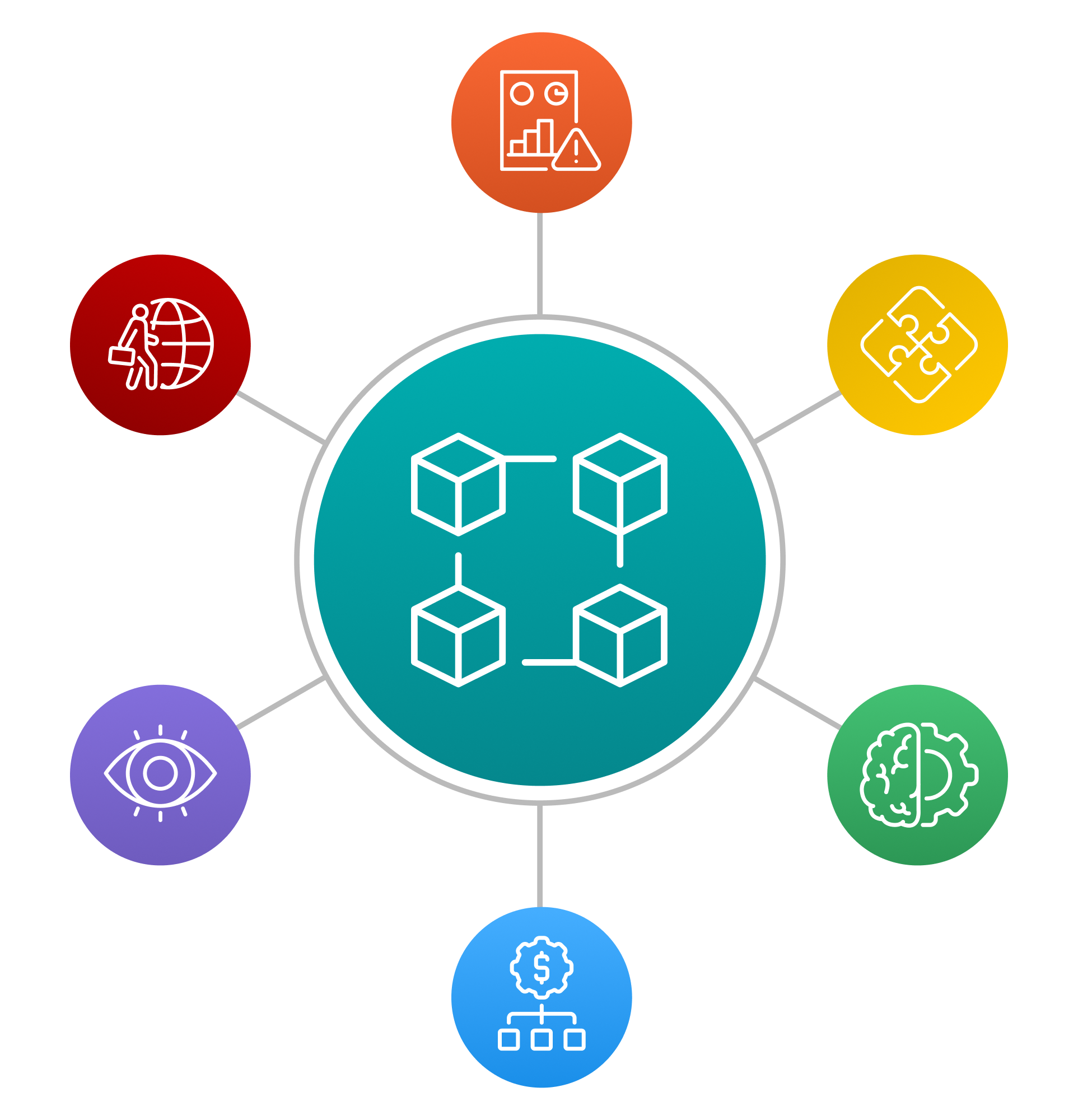
The provider adapts to your environment, not the other way around. That means API, EDI and event based connectivity to the systems you already run, trading forced rip and replace for full technical portability.

Connect ERP, TMS, WMS, procurement and visibility platforms, normalize data across providers and replace batch reconciliation with real-time events. Every other capability depends on this foundation.
One view across orders, shipments, inventory and capacity, with common standards for carriers, warehouses, brokers, technology vendors and AI agents. Trade-offs are priced, not estimated.
The direct ability to act on what the data show, including tendering, exception resolution, settlement and provider coordination. This is what separates an orchestration layer from an analytics layer.
Automation for routine work, agentic execution within set boundaries, and human review for decisions that carry real consequences. Every decision stays traceable, and models can be swapped as the field advances.
| 4PL ModelOrchestrates the whole network | 3PL ModelExecutes a defined function | |
|---|---|---|
| Scope | Designs, builds and runs coordination across many providers and systems, including 3PL capability | Runs a defined function or mode: transportation, warehousing, forwarding, customs or fulfillment |
| Neutrality | Recommends and manages capabilities whoever owns them, even ones that compete with its own | Operates its own network, so owned capacity shapes its recommendations |
| Technology | Deploys an integration layer and control tower across shipper and provider systems, on normalized data | Deploys TMS and WMS tactically to run its own operation, with limited customization |
| Accountability | Shares written decision rights with a single point of accountability, backed by SLAs and scorecards | Leaves full decision-making with the shipper, with one contact point per service and shorter terms |
| Improvement | Runs improvement as a standing engineering function, so redesign is continuous rather than annual | Improves only inside its own operation, often at bid or review points |
©2026 Redwood Logistics. Privacy policy Terms & Conditions